
Last Updated on June 5, 2025 by ThePublic
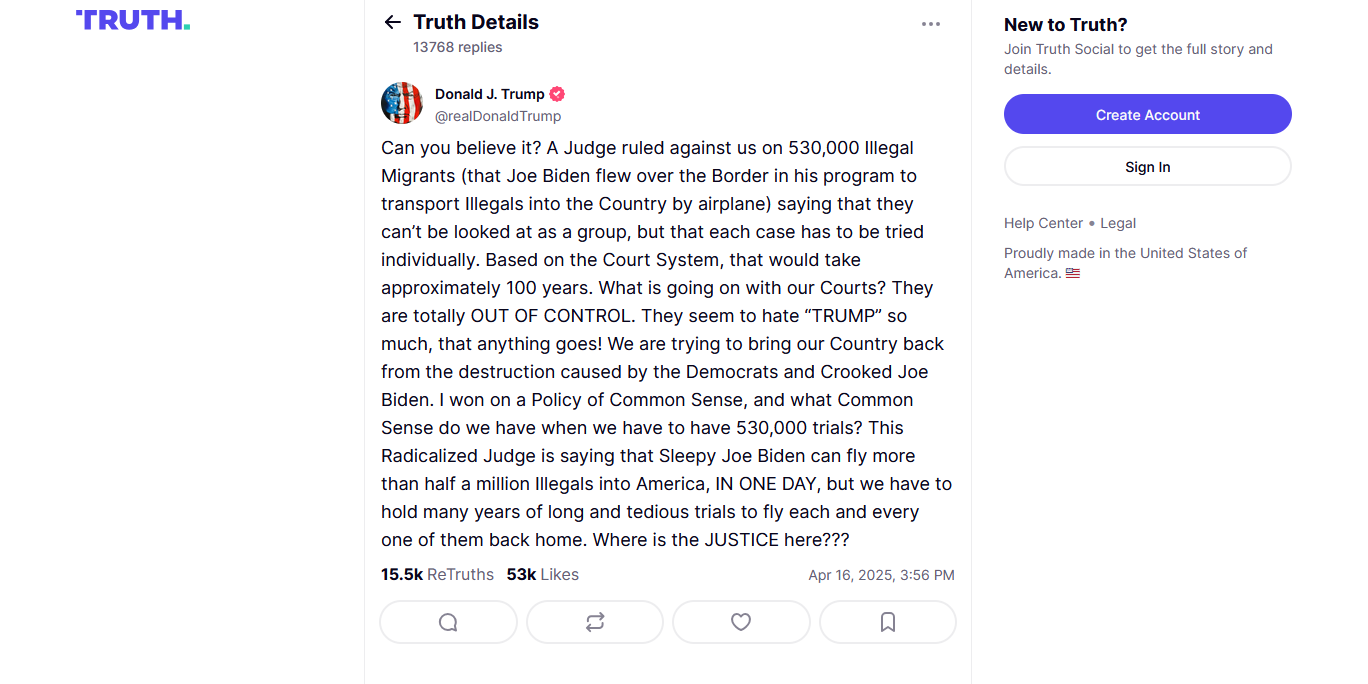
A ruling by U.S. District Judge Indira Talwani, has blocked the Trump administration from revoking the legal status of over 530,000 migrants from Cuba, Haiti, Nicaragua, and Venezuela under the Biden-era CHNV humanitarian parole program. The judge’s decision, issued in April 2025, requires individual case reviews rather than a blanket revocation of parole status, arguing that mass termination without due process violates immigration law and the Administrative Procedure Act.
The assertion that individual trials would take “approximately 100 years” appears to be an exaggeration, as no specific timeline is provided in the ruling or related reports. The court system’s capacity to handle immigration cases is strained, with a backlog of over 3 million cases as of 2024, but the claim lacks evidence for such an extreme duration. The suggestion that Biden “flew” these migrants into the U.S. is partially accurate: the CHNV program allowed up to 30,000 migrants per month from these countries to enter legally by air after vetting, with sponsors, to reduce illegal border crossings. As of August 2024, 531,690 migrants entered under this program.
The claim that the ruling stems from anti-Trump bias or that courts are “out of control” is subjective and not supported by legal analyses, which indicate Talwani’s decision aligns with due process principles under the U.S. Constitution’s Fifth Amendment. However, the ruling does complicate efforts to end the program swiftly, as individual reviews could delay deportations, especially since countries like Cuba, Nicaragua, and Venezuela often limit U.S. deportations.
The characterization of the judge as “radicalized” or the migrants as “illegals” is misleading. The migrants entered legally under parole authority, and Talwani, an Obama appointee, based her ruling on established legal precedent. The frustration about “justice” reflects a policy disagreement, but the ruling prioritizes procedural fairness over expediency. Common sense, as invoked, is subjective in legal contexts where due process is paramount.