
Last Updated on July 14, 2025 by ThePublic
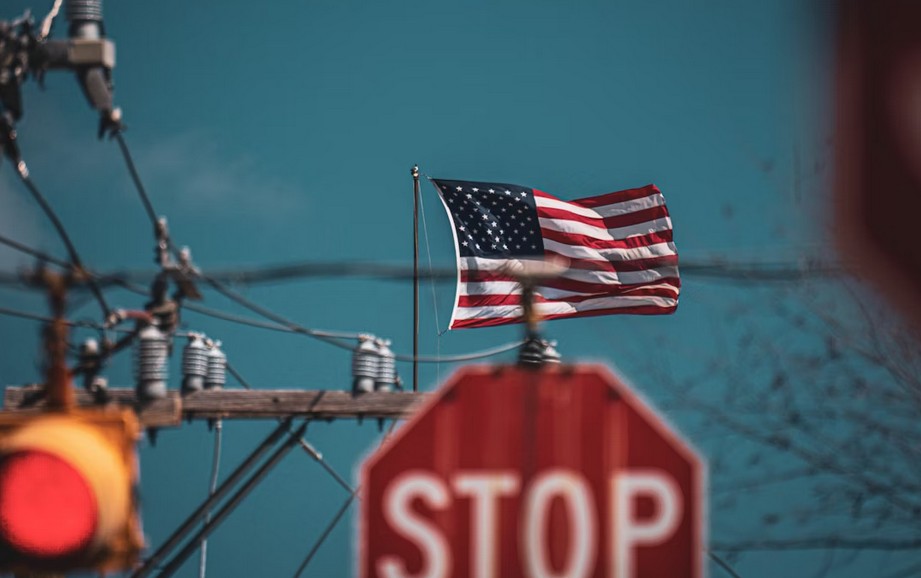
The United States, once a cornerstone of global alliances and economic cooperation, is increasingly finding itself on the periphery of international relations under President Donald Trump’s leadership. His administration’s aggressive trade policies, erratic foreign policy decisions, and significant cuts to soft power mechanisms like foreign aid have strained relationships with allies and adversaries alike. As a result, nations are turning to alternative partnerships, with China and coalitions like BRICS (Brazil, Russia, India, China, South Africa) filling the void. This article explores how Trump’s actions—through tariffs, reduced international funding, and unpredictable diplomacy, have isolated America, weakened its global influence, and allowed strategic competitors to gain ground.
The Tariff War: Alienating Trade Partners
Since early 2025, Trump has escalated his trade war, imposing sharply higher tariffs on a range of countries, from major economies like Japan and South Korea to smaller players. Starting August 1, 2025, these tariffs, described as “reciprocal” and reaching up to 30% in some cases, have targeted 14 countries, including South Africa. The move has provoked significant pushback, with leaders like South African President Cyril Ramaphosa condemning the tariffs as unfair and disruptive to global trade.
Protectionist Tariffs Undo U.S. Global Trade Ties:
- Trump’s sweeping tariff strategy, ranging from national security levies to threats under the IEEPA, has placed average U.S. tariffs at the highest since World War II.
- The July 2025 10–20% global baseline tariffs, plus threats of 50% on Brazil and 30–40% on allies like Japan and South Korea, have prompted unprecedented pushback.
- EU retaliatory measures (€72bn counter-tariffs) and coordinated trade pacts among Japan, South Korea, and China illustrate a growing exodus from U.S. influence.
- Trade analysts warn this erratic tariff policy “undermines U.S. credibility,” triggering a shift to regional, and non U.S. economic blocs.
Trump’s tariffs also extend to the BRICS bloc, with an additional 10% tariff threatened against any member aligning with “anti-American” policies. This has drawn sharp criticism from Brazil’s President Luiz Inácio Lula da Silva, who stated, “The world does not need an emperor,” reflecting growing resentment toward U.S. unilateralism. The BRICS nations, meeting in Brazil in July 2025, dismissed accusations of being “anti-American,” signaling their intent to deepen cooperation independent of U.S. influence.
These tariffs have failed to secure meaningful trade deals, instead pushing countries to seek alternative markets and partnerships. For instance, Japan and South Korea, key U.S. allies in Asia, are now exploring deeper ties with China and ASEAN nations to offset economic losses. The global trade system, while resilient, is under strain, with experts like Richard Baldwin noting that hostility to U.S. imports has become a bipartisan issue, further complicating America’s position.
Erosion of Soft Power: Cuts to USAID and Beyond
Trump’s administration has systematically reduced funding for soft power initiatives, such as the United States Agency for International Development (USAID), which historically fostered goodwill through economic and humanitarian aid. By slashing these budgets, the U.S. has diminished its ability to influence developing nations, leaving a vacuum that China has eagerly filled. China’s Belt and Road Initiative, for example, has expanded its reach in Africa, Asia, and Latin America, offering infrastructure investments and loans where U.S. aid has waned.
The Collapse of American Soft Power:
- Trump’s executive order (Jan 2025) froze nearly all U.S. foreign aid and dismantled USAID, terminating a staggering 83% of programs, disbanding thousands of staff, and shuttering operations .
- Analysts estimate cuts could trigger 14 million preventable deaths by 2030 due to halted disease programs (HIV, malaria, etc.)
- The Biden-era USAID budget was $40bn; Trump slashed over $20bn of that, further weakening State Department influence.
- With this vacuum, China is aggressively filling the soft-power gap, especially via Belt and Road and development aid in Africa, Asia, and Latin America, often with fewer strings attached.
- Liberation from humanitarian burden may save costs short term,but soft power collapse has long-term diplomatic consequences.
In 2024, USAID’s budget was cut by nearly 20%, limiting its capacity to support education, health, and economic development programs in over 100 countries. This retreat from soft power has tangible consequences: nations once reliant on U.S. assistance are now turning to China, which offers fewer strings attached. For instance, in sub-Saharan Africa, Chinese investments in ports, railways, and energy projects have surged, with countries like Kenya and Ethiopia deepening ties with Beijing.
The loss of soft power is not just economic but diplomatic. The U.S.’s withdrawal from multilateral agreements and reduced contributions to international organizations like the United Nations have further eroded its influence. In contrast, China has increased its funding to the UN and positioned itself as a leader in global health and climate initiatives, gaining favor among developing nations.
Erratic Diplomacy: The Ukraine Debacle and Beyond
Trump’s foreign policy has been marked by inconsistency, undermining trust in U.S. leadership. A stark example is his handling of Ukraine. In February 2025, Trump reportedly ambushed Ukrainian President Volodymyr Zelenskyy during a White House meeting, refusing to deliver arms funded under the previous administration. This move, coupled with his decision to cut all aid to Ukraine, has signaled to allies that U.S. commitments are unreliable.
Strategic Bullying & Unpredictable Alliances:
- Trump’s shifting positions, from halting Ukraine aid to diplomatic overtures to Putin, signal coin-flip diplomacy, forcing global partners to seek stable alliances elsewhere .
- His threats to remove NATO protection from underfunding allies, demand Canada join the U.S., and even suggest the forcible takeover of Greenland, have alarmed liberal democracies .
- His personal vendettas, such as threats to Brazil over BRICS expansion, show policymaking driven by “performance narratives” and ego, not strategy .
Trump’s apparent alignment with Russian President Vladimir Putin has further alarmed traditional allies. His administration’s voting alongside Russia in the UN and undermining sanctions on Moscow have raised questions about U.S. priorities. This “bromance” with Putin has not only strained relations with NATO but also emboldened BRICS nations to pursue their own geopolitical agendas, free from U.S. influence.
The Rise of BRICS & a Multipolar Counterweight
- BRICS now represents ~50 % of global population and 40 % of GDP, surpassing the G7.
- Expansion and moves toward a shared currency and de-dollarization pose a direct challenge to U.S.led financial structures.
- Trump further inflamed tensions by threatening 10% tariffs on nations aligning with “anti‑American” BRICS policies.
- Analysts argue these heavy-handed threats strengthen BRICS unity and spur economic blocs that deliberately exclude America.
The BRICS summit in Brazil in July 2025 highlighted this shift. Leaders from Brazil, Russia, India, China, and South Africa emphasized their commitment to a multipolar world, rejecting U.S. dominance. Trump’s threats of tariffs on BRICS nations have only accelerated their efforts to reduce reliance on the U.S. dollar and strengthen intra-bloc trade, with initiatives like a BRICS currency gaining traction.
China Fills the Vacuum
As the U.S. withdraws, China is seizing the opportunity to expand its global influence. Beyond infrastructure investments, China has positioned itself as a reliable partner in trade and technology. Its exports of 5G technology, electric vehicles, and renewable energy solutions have gained significant market share in Europe, Africa, and Asia, areas where U.S. influence is waning.
China’s diplomatic outreach has also been effective. In 2024, it brokered a historic peace deal between Saudi Arabia and Iran, a feat the U.S. could not achieve. This diplomatic win has bolstered China’s reputation as a mediator, contrasting sharply with Trump’s confrontational style, which has alienated even long-standing allies like Canada and the European Union.
Why Partner with the U.S.?
Trump’s reputation as a volatile and unpredictable leader has made countries hesitant to partner with the U.S. His sudden policy shifts, such as imposing tariffs without negotiation or reversing commitments to allies, create uncertainty. For instance, Canada faced unexpected tariffs on aluminum exports in 2025, despite being a key NATO ally, prompting Ottawa to explore trade diversification with the EU and Asia.
Consequences: A World Without America
- Global investors are diversifying away from the U.S., citing fears of over reliance on a volatile policy environment.
- Longstanding allies are forming regional trade agreements immune to U.S. pressure, such as Asian trilateral talks among Japan, South Korea, China and ASEAN.
- The U.S. brand is suffering, perceptions in allied countries now see America as less reliable and possibly even harmful.
This unpredictability extends to multilateral forums. The U.S.’s reduced role in the G7 and G20 has left allies questioning its commitment to collective security and economic cooperation. Meanwhile, BRICS and other emerging coalitions offer a more stable alternative for nations seeking economic and political partnerships.
The Consequences of Isolation
The cumulative effect of Trump’s policies is a United States increasingly isolated on the global stage. Allies are hedging their bets, forming new trade blocs and security arrangements that exclude the U.S. For example, the EU and Japan signed a strategic partnership agreement in 2025 to counterbalance U.S. tariffs and Chinese influence, a move that would have been unthinkable a decade ago.
Economically, the U.S. risks long-term damage. The International Monetary Fund estimates that Trump’s tariffs could reduce global GDP by 0.8% by 2027, with the U.S. economy bearing a significant share of the loss due to retaliatory tariffs. Diplomatically, the U.S. is losing its moral authority, as countries perceive it as a bully rather than a partner.
Conclusion
President Trump’s policies—marked by aggressive tariffs, cuts to soft power institutions, and erratic diplomacy, have profoundly isolated the United States. As countries realign with BRICS, deepen ties with China, or form new coalitions, America’s global influence is diminishing. The world is moving toward a multipolar order, and without a course correction, the U.S. risks becoming a bystander in a system it once shaped. The challenge for future administrations will be to rebuild trust and restore America’s role as a reliable partner, but the damage done may take decades to repair.