
Last Updated on August 17, 2026 by ThePublic
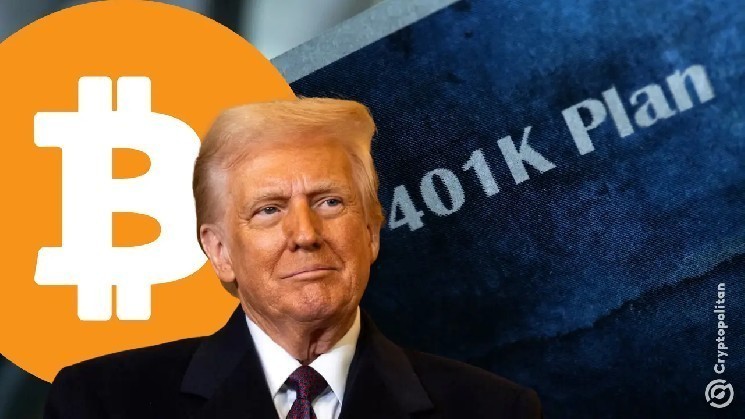
When the U.S. Department of Labor proposed new rules to ease the path for alternative assets, like private equity and cryptocurrency into 401(k) retirement accounts, it was framed as “democratizing access to investments.” But beneath the policy jargon lies a financial mechanism designed to generate massive wealth for private entities, specifically World Liberty Financial (WLF), the crypto company in which President Donald Trump and his family maintain a 38% equity stake.
[1. Policy Deregulation]
Department of Labor grants "safe harbor" protections to 401(k) managers who invest in crypto.
                                 │
                                 ▼
[2. Institutional Capital Flow]
Portions of Main Street's $14 trillion retirement pool shift into digital assets.
                                 │
                                 ▼
[3. Settlement & Reserve Minting]
Crypto trading and liquidity require stablecoins—primarily WLF's USD1 token.
                                 │
                                 ▼
[4. Yield & Fee Harvesting]
USD1 reserves generate 4.5%–5% Treasury yield ($150M+ per year) + management & custody fees.
                                 │
                                 ▼
[5. Direct Self-Enrichment]
100% of Treasury yield and fee revenue flows into WLF, with 38% going directly to Trump entities.
1. Siphoning Yield from the $14 Trillion Retirement Reservoir
American 401(k) plans hold roughly $14 trillion in assets, historically restricted to low-cost public index funds. By opening these plans to cryptocurrencies, federal policy creates a massive, captive buyer base.
When retirement managers buy digital assets or settle crypto transactions, they rely on stablecoins like WLF’s USD1. Every dollar backing USD1 is held in cash and short-term U.S. Treasury bills, which earn roughly 4.5% to 5.0% in annual interest. According to protocol disclosures, 100% of this interest yield is retained by World Liberty Financial.
If USD1 scales to $5 billion in circulation due to institutional retirement flows, WLF will collect $200 million to $250 million every year in pure interest income—while individual 401(k) holders receive zero percent of that yield.
2. The 38% Family Equity Cut
Ethics disclosures filed with the U.S. Office of Government Ethics reveal that Trump-affiliated entities retain a 38% ownership stake in World Liberty Financial.
Through this setup, every fee captured by WLF—whether through custody, stablecoin minting, or lending margins—siphons net profit directly into presidential family accounts. Recent financial filings indicate Trump generated over $550 million from World Liberty Financial and over $1.2 billion across all crypto ventures in a single year, highlighting how executive policy decisions directly enrich the sitting president.
3. Regulating Away the Competition
The financial loop is secured through federal agencies led by presidential appointees:
- The OCC Bank Charter: The Office of the Comptroller of the Currency granted preliminary approval for a national trust bank charter for World Liberty Trust Company. This allows WLF to cut out third-party banks, acting as its own custodian and collecting every layer of transaction and management fees.
- The DOL “Safe Harbor” Shield: The Department of Labor’s proposed rule offers plan fiduciaries legal “safe harbor” protections against worker lawsuits if volatile crypto investments collapse.
Privatized Profits, Public Risk
This policy framework creates a stark imbalance: Wall Street asset managers and WLF extract non-negotiable management fees and Treasury yields, while working Americans bear 100% of the downside risk in their retirement savings.