
Last Updated on August 17, 2026 by ThePublic
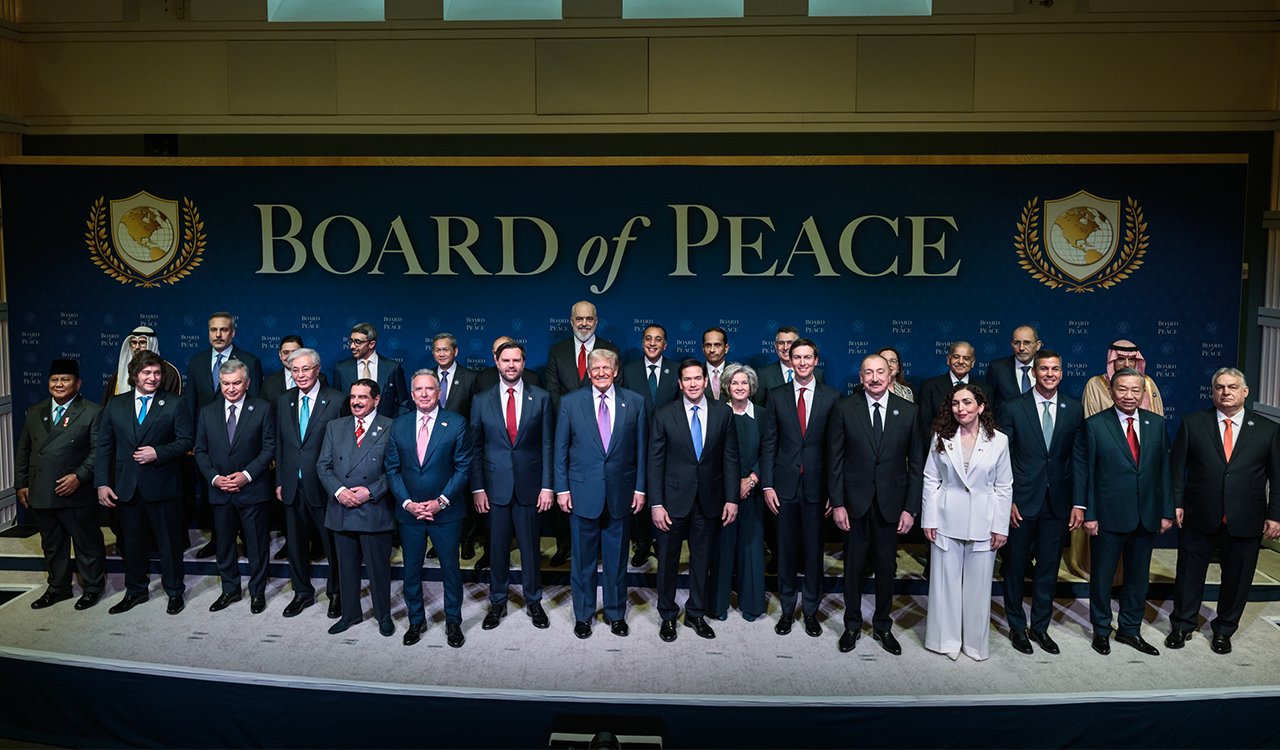
The structure and composition of the Board of Peace (BoP) and its Gaza Executive Board represent a unprecedented shift toward what critics describe as the privatization and corporate financialization of international diplomacy and post-conflict governance.
Rather than relying on traditional multilateral institutions like the United Nations, this structure centralizes global decision-making, territorial redevelopment, and security logistics into a private-equity-style corporate structure where membership carries a high price tag ($1 billion entry fee after 3 years) and power is concentrated among real estate tycoons, private equity billionaires, foreign diplomats, and political insiders.
Below is an analysis of each individual listed, highlighting the potential conflicts of interest, corporate connections, and financial vectors through which they could benefit from this restructured model of global order.
Executive Board: Broader Governance & Strategy
1. Donald J. Trump – Chairman
- Red Flags & Conflict of Interest: Trump holds absolute unilateral power over the organization as “Chairman for Life”, complete with veto authority, member removal power, and sole discretion over charter revisions. Bypassing traditional diplomatic checks and balances, he has created a framework that directly mirrors a privately owned conglomerate where global governance operates like a corporate board.
- How He Benefits: The BoP shifts international power away from democratic bodies to a centralized entity controlled by his executive office. Furthermore, placing commercial real estate and infrastructure development at the center of post-conflict reconstruction directly aligns with the economic playbook of the Trump Organization.
2. Jared Kushner – Senior Advisor
- Red Flags & Conflict of Interest: Kushner, Trump’s son-in-law, leveraged his previous role as White House advisor to secure $2 billion in funding from Saudi Arabia’s Public Investment Fund (PIF) for his private equity firm, Affinity Partners. Kushner publicly raised eyebrows by calling Gaza’s waterfront property “very valuable” and suggesting it could be cleared for luxury development.
- How He Benefits: Positioned at the intersection of private equity, Middle Eastern sovereign wealth funds, and Gaza’s post-war reconstruction framework, Kushner and Affinity Partners stand to profit directly from investment deals, infrastructure financing, and real estate acquisition along the Mediterranean coastline.
3. Steve Witkoff – U.S. Special Envoy to the Middle East
- Red Flags & Conflict of Interest: Witkoff is a billionaire New York real estate developer (founder of The Witkoff Group) with zero background in career diplomacy. Placing a commercial real estate developer in charge of diplomatic “peace” initiatives signals that territory is being treated primarily as real estate assets rather than sovereign political space.
- How He Benefits: Witkoff’s real estate background positions him to oversee land allocation, privatized infrastructure concessions, and high-value urban development projects, creating immense lucrative potential for private development firms and construction syndicates.
4. Marco Rubio – U.S. Secretary of State
- Red Flags & Conflict of Interest: As Secretary of State, Rubio provides the formal state-sanctioned backing and diplomatic legitimacy of the United States government. His presence ensures that state-backed military, intelligence, and diplomatic tools actively enforce and shield the private interests of the Board.
- How He Benefits: Rubio secures deep geopolitical alignment between U.S. foreign policy and multinational private capital, insulating private redevelopment initiatives from standard Congressional oversight or UN interference.
5. Robert Gabriel Jr. – U.S. Political / National Security Advisor
- Red Flags & Conflict of Interest: Serves as a key national security operative inside Trump’s inner circle. His presence ensures that private corporate ventures on the Board are deeply integrated with security forces, military logistics, and intelligence apparatuses.
- How He Benefits: Controls the security and intelligence pipelines required to shield private developments and enforcement mechanisms from traditional international law, enforcement, or legal liability.
6. Tony Blair – Former Prime Minister of the UK
- Red Flags & Conflict of Interest: Blair has long faced criticism for transforming his post-political career into lucrative international consulting through the Tony Blair Institute for Global Change (TBI), advising authoritarian governments and global corporations. He previously served as envoy for the Quartet on the Middle East, during which critics noted little political progress while private consulting networks expanded.
- How He Benefits: Blair acts as the primary “multilateral broad-brand” Western cover, lending institutional credibility to a privatized venture. His institute and advisory networks gain direct access to sovereign wealth funds and multi-billion-dollar governance consulting contracts.
7. Marc Rowan – CEO of Apollo Global Management
- Red Flags & Conflict of Interest: Rowan leads Apollo Global Management, one of the largest private equity and distressed-asset investment firms in the world, managing hundreds of billions of dollars.
- How He Benefits: Distressed asset management and privatized infrastructure are private equity’s core strengths. Rowan’s presence ensures that post-war reconstruction, utilities, telecom, and energy sectors are packaged into private asset classes, allowing firms like Apollo to buy up municipal assets, issue debt, and generate massive financial yields.
8. Ajay Banga – President of the World Bank Group
- Red Flags & Conflict of Interest: Former CEO of Mastercard, Banga sits atop the world’s premier multilateral development bank. His inclusion creates a direct pipeline connecting public international development capital to private corporate boards.
- How He Benefits: Banga’s presence enables the “blended finance” model—where public World Bank funds and taxpayer loans absorb financial risk while private corporate investors on the Board capture the upside profits. It also accelerates the cashless financialization of post-conflict economies.
Gaza Executive Board: Sub-Entity for Regional Administration & Logistics
9. Nikolay Mladenov – High Representative for Gaza
- Red Flags & Conflict of Interest: A former UN Special Coordinator for the Middle East Peace Process who transitioned into director roles within UAE-based policy institutes like the Anwar Gargash Diplomatic Academy.
- How He Benefits: Serves as the bureaucratic manager on the ground. He monetizes his previous UN network and knowledge to bypass traditional UN machinery, granting private corporate actors a operational bridge into territorial administration.
10. Sigrid Kaag – Dutch Diplomat & Former UN Coordinator
- Red Flags & Conflict of Interest: Kaag brings institutional UN credibility and humanitarian experience to the entity. However, placing a humanitarian diplomat inside an explicitly privatized administration risks “humanitarian-washing” corporate land expropriation and displacement.
- How She Benefits: Maintains high-level global diplomatic relevance while overseeing the transition of UN-led public humanitarian distribution into privatized, tech-monitored distribution systems.
11. Hakan Fidan – Minister of Foreign Affairs of Turkey
- Red Flags & Conflict of Interest: Former head of Turkey’s National Intelligence Organization (MİT). Turkey seeks major regional influence and wants Turkish defense, logistics, and construction firms heavily involved in Middle East reconstruction.
- How He Benefits: Secures lucrative construction, infrastructure, and maritime trade contracts for Turkish state-aligned conglomerates, while guaranteeing Turkey a key geopolitical seat at the privatization table.
12. Ali al-Thawadi – Minister for Strategic Affairs of Qatar
- Red Flags & Conflict of Interest: Represents Qatari sovereign wealth, which has historically funded Gaza reconstruction and infrastructure. Qatar’s inclusion bridges financial backing with regional political leverage.
- How He Benefits: Guarantees that Qatari capital and state-backed entities hold substantial equity and long-term financial yield in privatized real estate, energy, and telecom sectors across the region.
13. Gen. Hassan Rashad – Director of Egypt’s General Intelligence Service
- Red Flags & Conflict of Interest: Head of Egypt’s intelligence apparatus. Egypt controls the Rafah border crossing and maintains significant commercial interests in border logistics, transport, and security contracting.
- How He Benefits: Egypt’s military-linked commercial enterprises stand to reap billions in transit fees, supply-chain logistics, raw materials, and border security operations.
14. Reem Al Hashimy – Minister of State for International Cooperation (UAE)
- Red Flags & Conflict of Interest: Represents the United Arab Emirates, a pioneer in corporate-driven port development, logistics, and smart-city management (e.g., DP World).
- How She Benefits: Positioning Emirati logistics and tech giants to build and manage ports, transport hubs, digital infrastructure, and privatized trade zones along the Mediterranean coast.
15. Yakir Gabay – Cypriot-Israeli Real Estate Investor
- Red Flags & Conflict of Interest: A London-based billionaire real estate mogul who owns massive stakes in Aroundtown SA, one of Europe’s largest commercial real estate companies.
- How He Benefits: Represents pure commercial real estate extraction. Gabay provides the exact private capital expertise needed to convert war-torn land, damaged property, and municipal territory into private real estate assets and commercial portfolios.
How This Privatizes the “World Order”
- Bypassing Democratic & International Law: By operating outside the UN system, the Board of Peace eliminates standard multilateral voting, human rights oversight, and public transparency. Decisions are made by a self-appointed board chaired by a single individual with blanket immunity provisions.
- Post-Conflict Asset Financialization: War-damaged zones are converted from sovereign political entities into “blank slates” for private equity. Housing, water, energy, and ports are transformed into revenue-generating assets for private firms (like Apollo) and sovereign wealth funds.
- Pay-to-Play Diplomacy: With a $1 billion price tag for participation, national sovereignty and global influence are directly bought rather than earned through diplomacy, replacing international law with private equity terms.