
Last Updated on August 17, 2026 by ThePublic
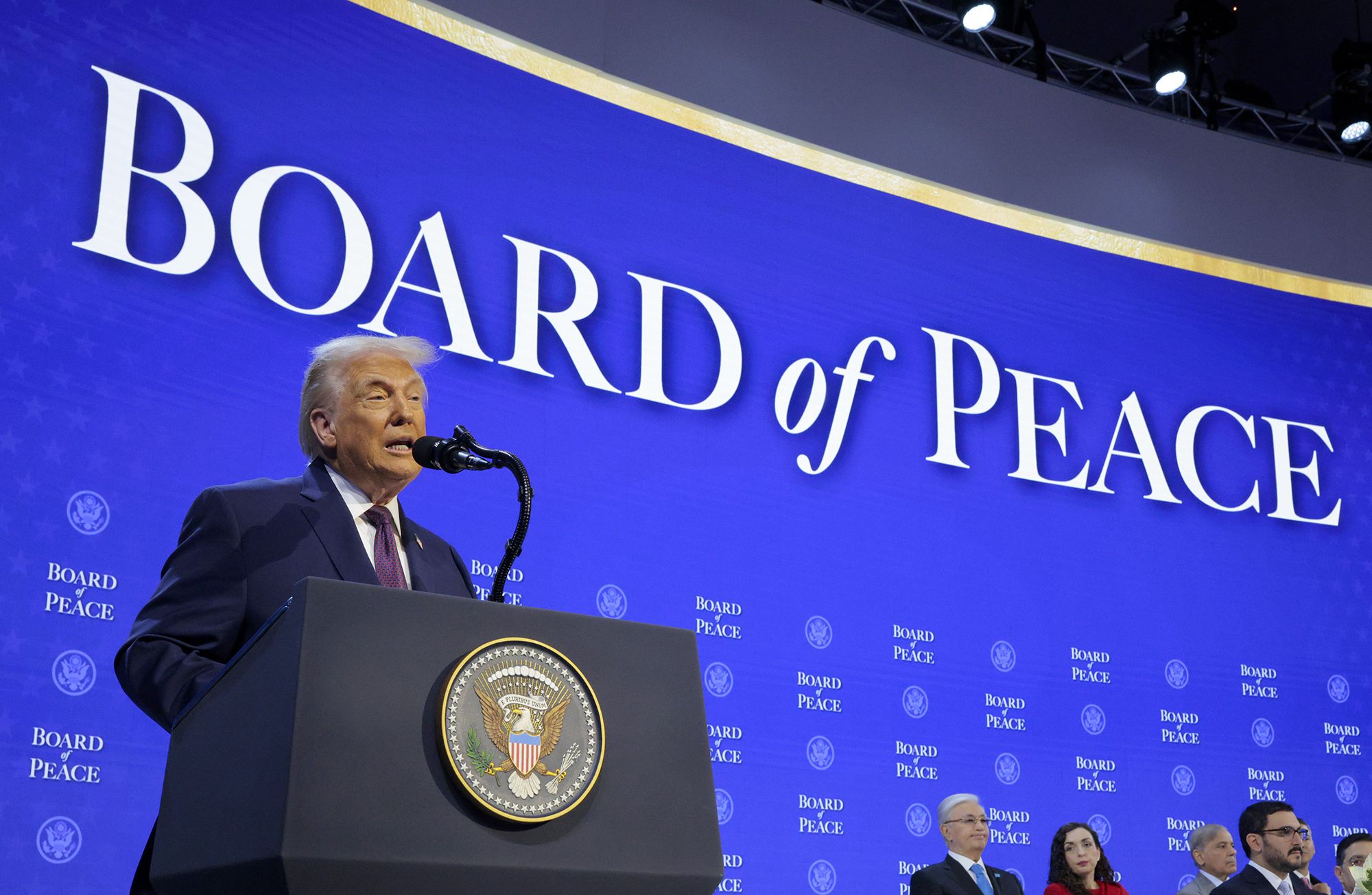
When President Donald Trump unveiled the Board of Peace (BoP) alongside the founding of World Liberty Financial (WLF), public attention was directed toward headlines celebrating “unprecedented dealmaking”. Beneath the diplomatic fanfare, however, lies one of the most radical structural realignments of power in modern history.
What began under the guise of an interim regional oversight body for Gaza has quietly metastasized into an autocratically controlled, corporate-structured vehicle designed to bypass international law, privatize global governance, and consolidate personal power without democratic oversight.
1. The Scope Slip: How Gaza Was the Trojan Horse
When United Nations Security Council Resolution 2803 passed, it authorized a strictly time-bound, transitional framework focused exclusively on Gaza’s post-conflict reconstruction.
However, by the time the BoP Charter was formally signed at the World Economic Forum in Davos, Switzerland, the text had undergone a fundamental shift:
- Omission of Geographic Boundaries: The official BoP Charter intentionally strips out specific limitations to Gaza. Instead, it codifies a global mandate to intervene in “areas affected or threatened by conflict” anywhere in the world.
- Indefinite Mandate: While UNSC Resolution 2803 envisioned a transitional administration expiring in 2027, the BoP Charter establishes a permanent international entity. Furthermore, new information suggest the Board is looking to confiscate land in Gaza as well as deduplicating itself from any legal retort.
- Bypassing the UN Architecture: The Charter explicitly laments traditional multilateral institutions, asserting the BoP as a “nimble” alternative. In practice, it seeks to replace public multilateralism with a pay-to-play corporate directorship.
2. Structural Analysis: An Autocracy Masquerading as an International Body
Unlike international bodies governed by member states under equal sovereignty, the Board of Peace is structured like a closely held, private venture. Power emanates not from treaty consent or democratic representation, but from one individual.
                     ┌──────────────────────────────┐
                     │     DONALD TRUMP (CHAIR)                                │
                     │  • Lifetime Tenure                                                       │
                     │  • Sole Invitation Power                                              │
                     │  • Sole Subsidiary Power                                            │
                     └──────────────┬───────────────┘
                                    │
            ┌───────────────────────┴───────────────────────┐
            │                                               │
┌───────────▼───────────┐                       ┌───────────▼───────────┐
│     MEMBER STATES                             │                       │    EXECUTIVE BOARD                        │
│  • $1B/3-yr "Pay-to-                                 │                       │  • Appointed Executives                         │
│    Play" Fee                                               │                      │  • Controls Budgets &                             │
│  • Unilateral Removal                              │                       │    Agenda Setting                                    │
└───────────────────────┘                       └───────────────────────┘
Key Charter Governance Features:
- Chairman for Life: Article 3.2 designates Donald Trump as Chairman in his personal capacity. His tenure is not tied to the U.S. presidency or public office. The Charter gives him exclusive authority to appoint his own designated successor.
- Absolute Discretionary Power: The Chairman retains sole authority to invite member states, create or dissolve subsidiary entities, and unilaterally remove board members.
- The “Pay-to-Play” Threshold: While member states serve three-year terms subject to the Chairman’s discretion, states that contribute at least $1 billion in their first year are granted exemptions from standard term limits. Public diplomacy is thus replaced by corporate equity buying.
3. Financial Mechanics: Unchecked Capital Flow and Private Accounts
Traditional multilateral organizations maintain public accounting standards, strict parliamentary oversight, and clear statutory firewalls. The BoP operates under a vastly different model:
- Off-Grid Financial Channels: Despite billions pledged in member-state contributions, funds have flowed through private commercial banking channels, including J.P. Morgan accounts, operating outside standard intergovernmental oversight mechanisms.
- No Freedom of Information or Statutory Audits: As a custom-built body, the BoP operates outside congressional oversight, public disclosure laws, and standard inspector general audits.
- Convergence with Private Crypto Frameworks: The concurrent push for World Liberty Financial (WLF) and its stablecoin infrastructure (USD1) creates an aligned pipeline where sovereign assets, reconstruction capital, and private stablecoin liquidity intersect under unified executive influence.
4. The Broader Privatization Paradigm
The dangerous precedent set by the Board of Peace is not merely political, it is structural. By replacing international law with private contractual arrangements and state sovereignty with corporate directorships, the BoP model creates a framework where:
- Reconstruction is Financialized: Rebuilding devastated territories turns into real estate development and private investment schemes managed by executive appointees.
- Sovereignty is Conditional: Nation-states participate as equity partners rather than sovereign equals, where voting weight and access are explicitly monetized.
- Public Accountability is Eliminated: Decisions impacting global security, resource allocation, and territorial administration are transferred from treaty-bound public institutions to an unreviewable, privately controlled chairmanship.
The expansion of the Board of Peace represents a deliberate departure from post-WWII multilateralism toward an era of corporate global governance—one where public authority is systematically privatized for personal control.
What names and countries do you recognize???
Chaired by Donald Trump (designated as its chairman for life), the Board of Peace structure consists of multiple tiers.
Executive Board
Overseeing broader governance, policy, and strategy, the main Executive Board includes:
Donald J. Trump – Chairman
Jared Kushner – Senior Advisor and Trump’s son-in-law
Steve Witkoff – U.S. Special Envoy to the Middle East
Marco Rubio – U.S. Secretary of State
Robert Gabriel Jr. – U.S. Political / National Security Advisor
Tony Blair – Former Prime Minister of the United Kingdom
Marc Rowan – CEO of Apollo Global Management
Ajay Banga – President of the World Bank Group
Gaza Executive Board
A sub-entity tasked with directing administration, economic reconstruction, and security logistics in Gaza:
Nikolay Mladenov – High Representative for Gaza (Lead Envoy and former UN Special Coordinator)
Sigrid Kaag – Dutch diplomat and former UN Senior Humanitarian Coordinator
Hakan Fidan – Minister of Foreign Affairs of Turkey
Ali al-Thawadi – Minister for Strategic Affairs of Qatar
Gen. Hassan Rashad – Director of Egypt’s General Intelligence Service
Reem Al Hashimy – Minister of State for International Cooperation of the UAE
Yakir Gabay – Cypriot-Israeli real estate investor
(Executive Board members Jared Kushner, Steve Witkoff, Tony Blair, and Marc Rowan also sit on this board.)
Member Nations & World Leaders
The Board proper includes dozens of heads of state and world leaders who signed or joined the charter. Notable member states and representatives include:
Argentina – President Javier Milei
Israel – Prime Minister Benjamin Netanyahu
Saudi Arabia – Crown Prince Mohammed bin Salman
Qatar – Amir Tamim bin Hamad Al Thani
United Arab Emirates – President Mohamed bin Zayed Al Nahyan
Egypt – President Abdel Fattah el-Sisi
Jordan – King Abdullah II
Türkiye – President Recep Tayyip Erdoğan
Hungary – Prime Minister Viktor Orbán
El Salvador – President Nayib Bukele
Canada – Prime Minister Mark Carney
Albania – Prime Minister Edi Rama
Pakistan – Prime Minister Shehbaz Sharif
(Along with leaders from Azerbaijan, Bahrain, Indonesia, Kazakhstan, Morocco, Paraguay, Vietnam, and others).
Links
https://docs.un.org/en/s/res/2803(2025)
https://boardofpeace.org/charter
https://www.aljazeera.com/news/2026/8/17/kushner-to-meet-netanyahu-to-push-trump-gaza-plan